

Female participation in business leadership has been evolving with the perception of how this advance has brought more effectiveness to companies’ results. In 2020, a study by the consultancy McKinsey showed that the most diverse organizations are 35% more likely to achieve above-average returns for the sector. On a daily basis, work processes conducted by teams made up of more diverse professional profiles have more chances of success thanks to the innovation and adaptation capacity of these teams.
Therefore, the central role that boards play in corporate governance makes these institutions a target of efforts for gender diversity, argues Afra Afsharipour, researcher and professor at UC Davis School of Law, in the article “Women and M&A,” published by UC Irvine Law Review. For the author, representation in board leadership is particularly important for M&A transactions due to the criticality of this role in setting the agenda and its influence on decision-making.
For a variety of reasons, ranging from academic preferences to the long working hours required, the financial world and, more specifically, the M&A field face a persistent gender equality gap. Analyzing the 700 largest M&A transactions between 2014 and 2020, Afsharipour found in her research that women held board leadership in only 10% of cases on the buy side and in 12.4% of cases on the sell side.
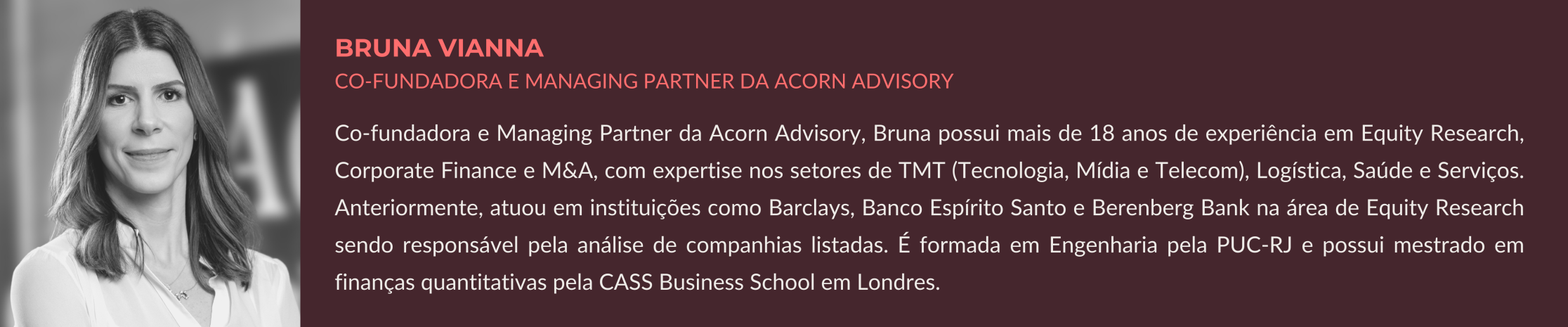
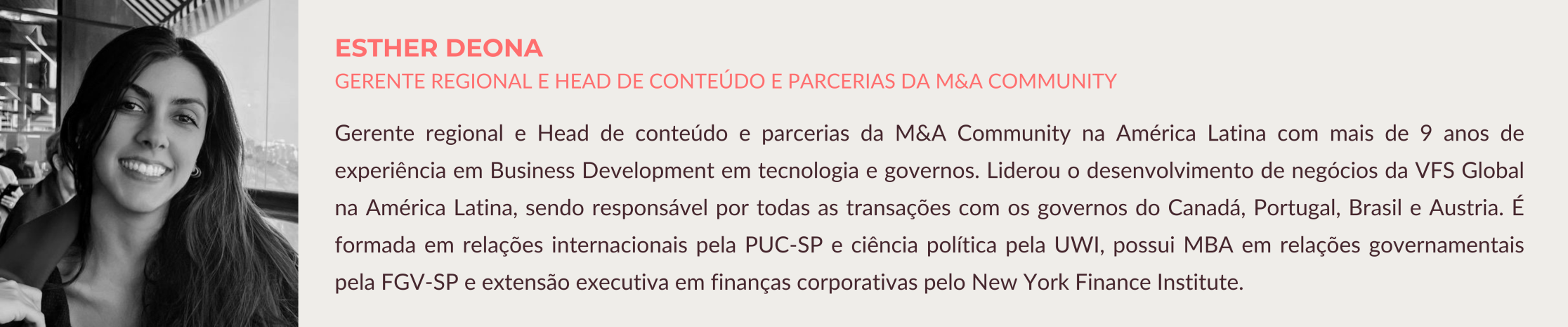
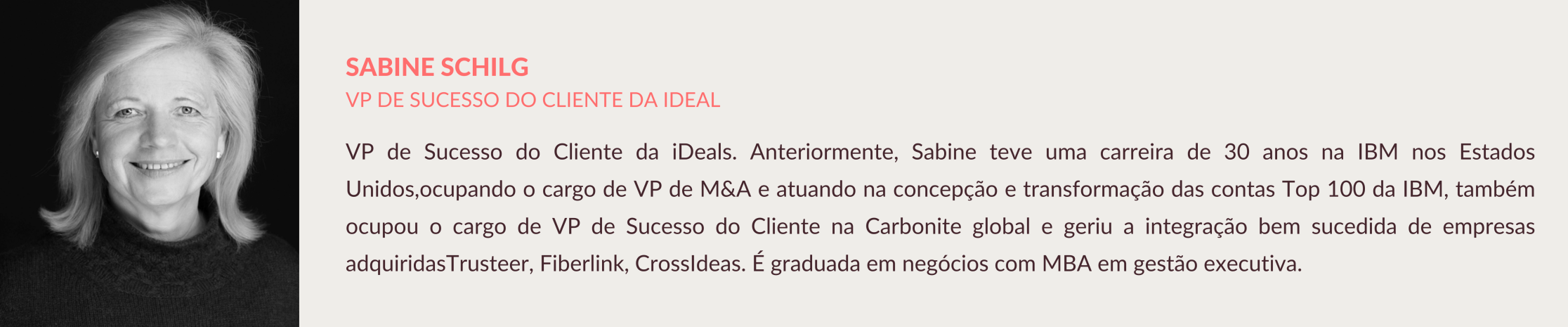
The good news is that major initiatives are being implemented as female participation rates in M&A evolve. Aware of the importance of inclusion and diversity for the business environment, we organized an important roundtable with Bruna Vianna, Managing Partner at Acorn Advisory, Esther Deona, Regional Manager at M&A Community, Karolyna G. Schenk, Executive Director of M&A at TOTVS, and Sabine Schilg, Vice President of Customer Success at iDeals.

ROUNDTABLE
Esther Deona – Welcome, how do you see the environment for female participation in the M&A market today?
Karolyna Schenk: we are evolving, but at a slower pace than we could be. There is still a significant underrepresentation of women in leadership among all the institutions involved in M&A, and this gap is not only in M&A, but in several other areas of the corporate environment. Inclusion is a key issue for the market in general.
Sabine Schilg: given the numerous benefits that inclusive teams and leadership bring to business and value generation, diversity issues are attracting the attention of a wide range of companies, investors, and the consumer market. As a result, we have seen a significant increase in the percentage of women on company boards and in senior management positions.
Bruna Vianna: in the M&A scenario, the female presence has a long way to go, in an environment in which male participation has always prevailed. However, driven by several factors, including the pandemic, remote work has brought more flexibility to the routine and forced companies to adapt their relationship with their employees. There was a shift in this view of work, which came to have productivity as its basis, compared to physical presence.
Esther – The pandemic impacted diversity in companies. Bruna, can you comment more on this statement?
Bruna: remote work especially influences the working condition for mothers, because we know how the parental routine still falls on women in most cases. I also saw an increase in female entrepreneurship during this period. But the main issue is that, until we have more women leaders who have space to promote changes in corporate culture, we will not be able to replicate the transformations we need to increase inclusion.
Esther – What are the most important tools to create opportunities for women in leadership?
Karolyna: solutions that managed to achieve greater gender diversity on Boards of Directors, over the past few years, are some of the many tools that could be considered and eventually adopted to transform M&A practice. For this to happen, at first, shareholders played an important role in pressuring for this agenda and, subsequently, there was a movement to expand these processes in the market, which has been gaining more and more strength. In addition, I believe that those women who manage to consolidate themselves in M&A leadership positions could and should contribute to reducing these gender disparities by training and empowering new talent.
Bruna: the first step is to mobilize the chain. Having women representing and empowering other women is important so that these professionals are prepared, and companies do not need to bet on them from scratch, since this is difficult in any industry. The second point is for the company to better understand the challenges of this scenario for women, because the M&A dynamic involves long hours. The pandemic sparked the discussion about quality and productivity versus physical presence and gave room for flexible schedules. As this professional gains more autonomy, the tendency is to feel more secure in the work environment. The third point is that many women went from corporate employees to entrepreneurs during this period. These companies led by female executives attracted impact funds and created market niches to foster their own corporate culture, prompting the market to rethink the more rigid hiring models.
Sabine: in addition to Bruna’s and Karolyna’s points, an important tool is mentoring throughout the career and the M&A journey. It is an opportunity to share knowledge, experience, and suggest routes, making a big difference along this path. The network that comes from mentoring is wonderful and opens many doors for business. And this process happens not only for the professionals who are entering the job market, but also for those who already hold senior leadership positions; an example is the W-CFO project, which accepts mentees in high positions.
Roundtable held by TTR – Transactional Track Record, in collaboration with iDeals.