
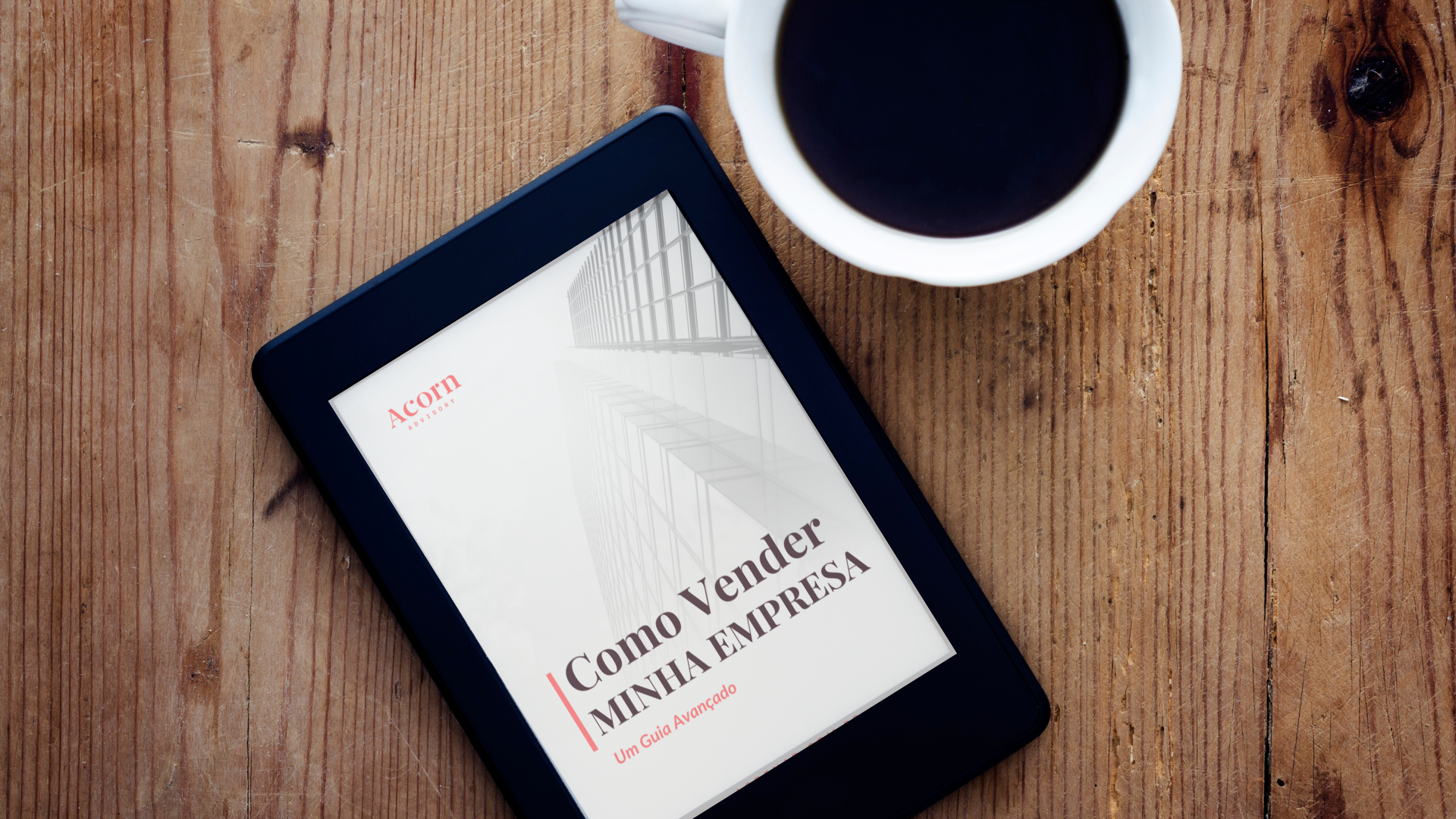
Click to download the full file: How to Sell My Company: An Advanced Guide 2023
Selling a company is a complex process, characterized by a series of strategic decisions, financial analyses, and contractual negotiations.
Acorn Advisory stands out in the M&A landscape, helping entrepreneurs avoid costly mistakes and maximize asset value during the sale.
In this in-depth guide, developed by Acorn, we explore each stage of this process.
__________________________________________________________________________________________________________________________________________________________________________________
Chapter 1: What Are the Main Reasons to Consider Selling Your Company?
REASONS FOR SELLING
The reasons or motivations for selling a company range from the search for liquidity and portfolio diversification to retirement linked to succession issues, a theme we will develop further in this study.
LEGACY
If you sell to a buyer who shares your vision and values, there is a greater likelihood that your company’s legacy will be preserved and even expanded.
LIQUIDITY OPPORTUNITY
Depending on the size and profitability of your company, there may be a significant market of buyers willing to pay a premium for your business. This offers an excellent opportunity for you and other shareholders to realize profits and obtain liquidity.
LACK OF SUCCESSION
If there is no clear succession plan or interested and, above all, capable heirs to take over the company, selling can be a strategic option.
COMFORTABLE RETIREMENT
A successful sale can provide the financial resources that allow for a comfortable retirement or the opportunity to explore other interests and passions.
GREATER CAPACITY FOR NEW INVESTMENTS
With the generation of the liquidity event, the flexibility to invest in a diverse range of opportunities is created. With the resources obtained, you have the freedom to explore investments in emerging sectors, international markets, or even disruptive innovations.
__________________________________________________________________________________________________________________________________________________________________________________
Chapter 2: What Do You Need to Know Before Selling Your Company?
FINANCIAL DUE DILIGENCE
Financial due diligence is an important stage; all financial statements and contractual obligations are meticulously analyzed. And for the success of the transaction, they must be provided clearly and correctly.
BUSINESS STRUCTURES AND CONTRACTS
Business owners must have a clear understanding of their existing business structures and contracts, and ensure that all agreements are properly documented and legally binding.
RISK ASSESSMENT
A comprehensive assessment of the risks associated with the transaction is essential, including financial, operational, and market risks. As we will see later, in specific cases part of the business risk remains with the seller for some time after the sale.
__________________________________________________________________________________________________________________________________________________________________________________
Chapter 3: How to Get the Best Value for Your Company?
BUSINESS VALUATION
The proper valuation of the company is vital; by taking into account financial multiples, asset valuation, comparable market transactions, and discounted cash flow analysis, one arrives at a valuation, which will later serve as a reference for conversations with investors.
VALUE OPTIMIZATION STRATEGIES
We will address value optimization strategies, including proposals for operational improvements, working capital optimization, and reallocation of resources to high-return areas of the company, aiming to increase the value of your company.
ACORN’S INTERNATIONAL REACH
Acorn Advisory is renowned for its extensive reach with national and international investors, facilitating transactions with foreign companies and foreign capital funds, presenting a diverse range of opportunities to potential global investors.
Case Study: The Apdata Transaction
PREPARATION AND ROADSHOW
Apdata, a leader in integrated technology solutions and HR outsourcing, is a success story in exploring the potential for value capture through a robust national and international roadshow, presented to more than 300 investors, enabling a series of proposals.
OUTCOME
The transaction maximized the asset’s value, allowing shareholders to carefully select among the proposals, preserving the company’s legacy and encouraging global expansion.
__________________________________________________________________________________________________________________________________________________________________________________
Chapter 4: What Are Your Responsibilities After You Sell Your Company?
TAX COMPLIANCE
We will discuss post-sale tax responsibilities, including compliance with reporting obligations and the importance of strategic tax planning.
LABOR LIABILITIES
We will address labor responsibilities, focusing on resolving pending issues and ensuring the protection of employees’ rights during the transfer.
CRIMINAL LIABILITIES
This segment emphasizes the need for complete and accurate disclosure, and adherence to legal regulations to avoid criminal repercussions.
__________________________________________________________________________________________________________________________________________________________________________________
Chapter 5: Main questions in the company sale process
In this chapter, we will address frequently asked questions related to the process of selling a company, providing detailed and technical answers, aiming to facilitate a successful transaction and transition.
5.1 What types of assessments are crucial before the sale?
Before selling, it is essential to carry out financial, operational, and market assessments to fully understand the value of the company and any potential risk associated with the transaction.
5.2 What is the role of a financial advisor in an M&A process?
A financial advisor assists in the proper valuation of the company, preparation of necessary documents, identification of potential buyers, and negotiation of terms to ensure the best possible valuation.
5.3 How can the transaction structure influence the sale price?
The transaction structure, whether through shares, assets, or a merger, can significantly influence the final sale price, affecting factors such as taxes, liabilities, and operational synergies, including potential pricing tied to the company’s future performance.
5.4 What are the strategies to maximize company value before the sale?
Strategies such as optimizing operations, restructuring debts, and implementing advanced technologies can significantly increase the value of the company before the sale.
5.5 How can I ensure the continuity of the corporate culture after the sale?
It is vital to negotiate terms that ensure the preservation of the corporate culture, possibly through contractual clauses that ensure the retention of key employees and the continuity of core business practices.
5.6 What are the possible regulatory obstacles in an M&A transaction?
Obstacles may include antitrust approvals (CADE in Brazil), third-party consents for the transfer of contracts and licenses, including potentially contracts with some clients.
5.7 What are the tax implications of a company sale?
The tax implications can be vast and complex, covering issues such as the taxation of capital gains, use of accumulated tax losses, and possible deferred tax obligations. A precise analysis of each situation is always worthwhile, but the 3 topics above will be the 3 main pillars of analysis.
5.8 How does due diligence affect the M&A process?
Due diligence allows for an in-depth analysis of the company’s assets, liabilities, contracts, and operational performance, directly influencing the valuation and terms of the deal.
5.9 What is a Confidentiality Agreement (NDA) and why is it important?
An NDA protects sensitive information during the negotiation process, preventing critical company details from being disclosed inappropriately; it should be a direct and at the same time simple document.
5.10 What is the role of company leadership during the M&A process?
Leadership plays a crucial role in facilitating a smooth transition, maintaining employee morale, and collaborating with buyers to ensure the company’s continued success, in addition to often playing a key role in executing the M&A itself, promoting strategic discussions with potential investors / buyers.
5.11 How can I identify and attract potential buyers?
The more qualified investors are contacted about a purchase or investment opportunity, the greater the chances that the entrepreneur will obtain, as a result of the process, a series of proposals made by different investor profiles, both national and international, but not only; we can also talk here about management profile and future plans with the new buyers, which is often one of the main pillars to be considered – your legacy and your new “day-to-day” after the sale process of your company.
Identifying potential buyers involves a strategic analysis of the market and closeness to the national and international M&A community; the greater the reach and distribution in the transaction, the greater the chances of good results.
5.12 What does the negotiation phase of an M&A process involve?
The negotiation phase involves the detailed discussion of the terms of the deal, including price, transaction structure, various types of guarantees, post-closing responsibilities, and depending on the transaction structure, the negotiation of a shareholders’ agreement with the definition and structuring of a governance model, which may at first be minimal, but organized.
5.13 How is the value of the company determined?
The value of the company is determined through various valuation methodologies, including EBITDA multiples, discounted cash flow analysis, and comparison with similar transactions in the sector. After these technical analyses, it is crucial to highlight that the value of a company or an asset is also extremely correlated with its level of demand in the market in general.
5.14 What is the importance of a successful post-acquisition integration?
A successful post-acquisition integration is vital to ensure that the company continues to thrive, preserving value and realizing the synergies identified during the process.
5.15 How can I ensure compliance with legal regulations during the sale?
Compliance can be ensured by working with lawyers specialized in M&A who have experience navigating the legal complexities of the transaction. Brazil has excellent firms specializing in M&A.
5.16 What is a roadshow and how can it add value?
A roadshow is the presentation of the company made by the founders, often with the CEO, to potential investors, offering the opportunity to personally meet each group of investors, resulting in greater closeness with those that make the most sense. Another important topic about the roadshow is the concept of creating a competitive and dynamic environment that can increase the sale price.
5.17 What are the key aspects of a share purchase agreement?
A share purchase agreement will detail the main terms of the transaction, such as purchase price, representations and warranties, and provisions on indemnification and closing.
5.18 How can international reach influence the success of an M&A transaction?
International reach can significantly expand the pool of potential buyers, allowing access to higher appreciation opportunities and entry into new markets.
5.19 What are the final steps in completing a company sale?
The final steps generally involve the fulfillment of all conditions precedent, which may include notice to the market / clients, authorization from banks to which the company has any debt, among other matters. Once these are confirmed, the funds are transferred, with the sellers receiving payment concurrently with the signing of the closing documents and the official transfer of ownership and control.
5.20 What are the main considerations for managing the transition after the sale?
The main considerations include the implementation of agreed transition plans, ensuring operational continuity and preserving relationships with clients and employees.
We have prepared this technical and detailed analysis of the M&A process, to help business owners make clear, informed decisions. The Acorn Advisory team is available to provide specialized support at every stage of your company’s sale journey.
__________________________________________________________________________________________________________________________________________________________________________________
Assertive. Expert. Global.
Our direct and simple approach to M&A helps transform our clients’ lives, and that’s what makes working with Acorn unique. We create a competitive process to obtain the best value, best conditions, and the possibility of choice for our client.